Why You've Already Lost by the Time You Get the Call
Dhruv Wadhwa
·
1 of 8: The Digital To Human Connection
·
In the 1960s, sales reps got a stack of Yellow Pages and a simple instruction: start calling. The window was as wide as the phone book.

By the 1990s it was email. More sends, more opens, more pipeline. If someone’s attention held for a few seconds, that was your opening.
Today, AI-generated outreach floods every inbox, and the first move most people make when they open one is select-and-delete. What I want to talk about isn’t that outreach got harder. It’s how much narrower the window actually is, and one statistic that changed how I think about sales
Four out of five B2B deals are won by the buyer’s pre-contact favorite:

I saw both sides of that stat in 2019. I prepped my team, we presented, it went great. Then the call came: they’d already decided. Why? They’d worked with the winner before — trust — and had no appetite to try something new — familiarity. The decision was made before our pitch started. We were wasting our time in that room, and I didn’t know it yet.
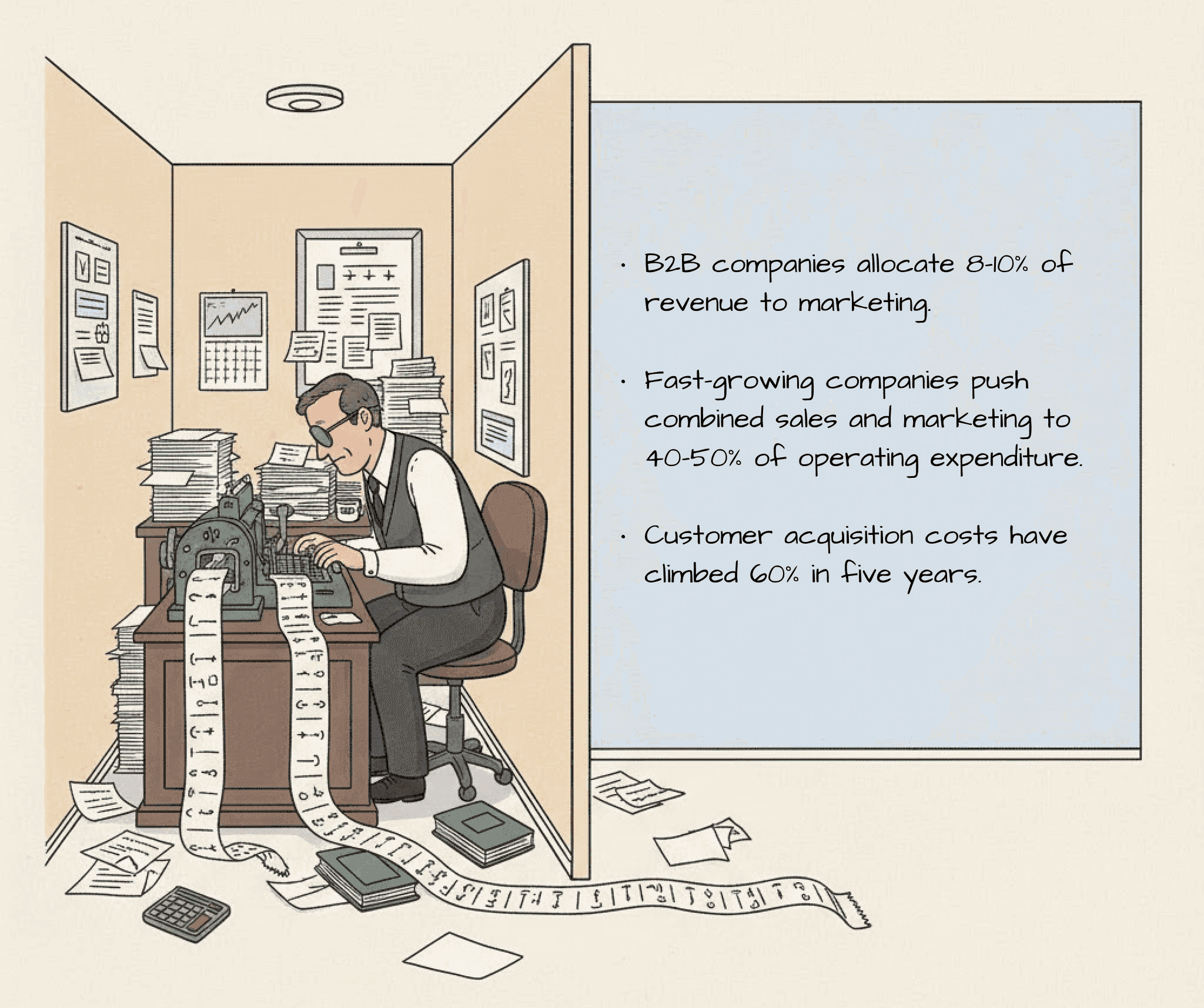
If the decision is mostly made before anyone talks to you, what exactly is all that outreach time and budget buying you?
Here’s the number underneath the number:
Only about 5% of your TAM is actively buying at any given time
The other 95% isn’t ignoring you. They’re just not there yet.
Most of it’s aimed at the wrong end of the funnel — spent before the buyer’s even in market. The window where you could have shaped how they think about the problem. Most teams miss it entirely, or they’re simply not visible when it’s open.
How do we get on the shortlist before one exist?
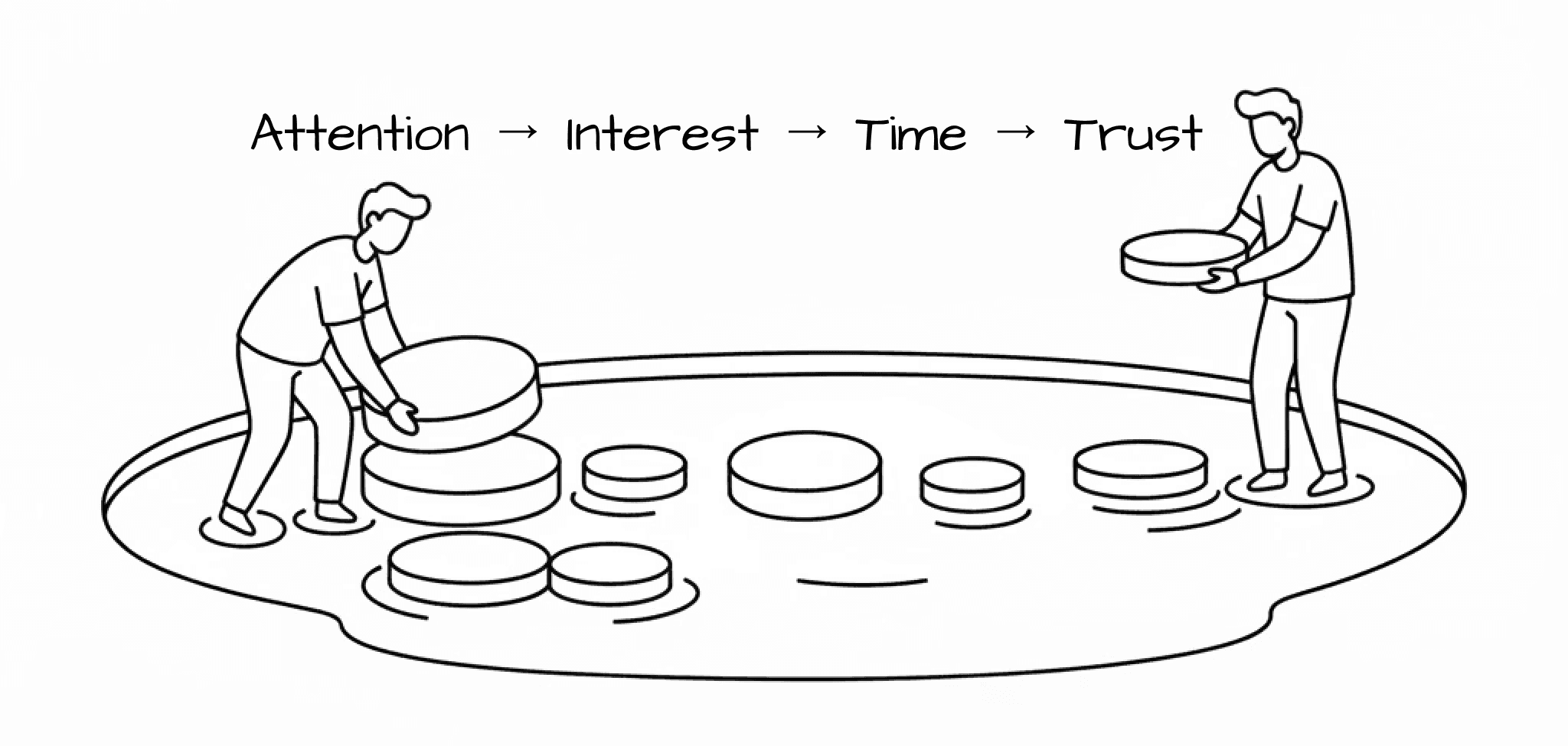
Interest:
This is where most BD efforts die quietly. Interest isn’t curiosity. it’s the moment someone believes you understand their problem. That’s the gap between “this person wants my business” and “this person gets it.”
Time:
What interest buys you, and what money can’t. In clinical trials, that means buying committees of eight to ten people who all need convincing, sales cycles stretching across quarters, and 77% of buyers describing their last purchase as “highly complex.” Time is the scarcest resource in the whole equation.
Trust:
Where deals actually close — not in the pitch deck, but in the accumulated weight of every interaction that said: this person showed up with something useful before they asked for anything.
The organizations winning right now aren’t outspending everyone at the wide end of the funnel. They’re just present, consistently, over months, so that when a buyer finally crosses into that 5%, they’re already on the list.
—
P.S. Article 2 is about what happens when the cost of a solution drops to near zero, and why that makes the problem harder, not easier.
—
Sources:
Image 1: 6sense 2025 Buyer Experience Report, 4,000+ respondents; Consensus 2025, 6M+ interactions
Image 2: Forrester 2024; SaaS Capital 2025; Paddle CAC Trends
Image 2: Prof. John Dawes, Ehrenberg-Bass Institute / B2B Institute
Image 3: Sources: Green Hat / 6sense; Demandbase 2025; Consensus 2025